


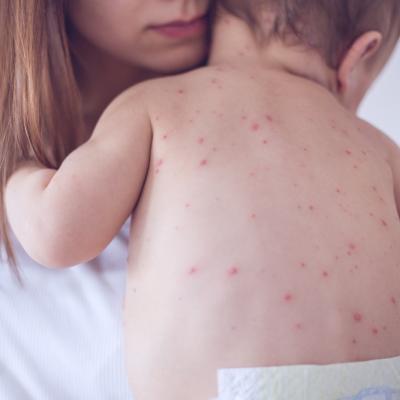
Councillor Obaida Ahmed, the City of Wolverhampton Council’s Cabinet Member for Health, Wellbeing and Community, said: “Children often pick up infections during the winter and spring months.
“Most of these illnesses are mild and can be treated at home. However, some infections can become more serious and may need medical attention – and 2 infections that families should be particularly alert to time of year are chickenpox and scarlet fever.
“It is important that parents and carers know the symptoms to look out for and what to do if their child becomes unwell.”
Chickenpox is a highly infectious virus, most common in children under 10. It usually causes fever and an itchy rash, and most children recover within a week. Although rare, complications such as chest infections or inflammation of the brain can occur. Pregnant women, newborns and people with weakened immune systems are at higher risk and should seek medical advice if exposed.
The virus spreads easily through coughs, sneezes and contact with blister fluid. Children are infectious from 2 days before the rash appears until all blisters have crusted over, usually 5 to 6 days. They should stay off school or nursery until this happens.
A new vaccination programme is now available, with 2 doses of the MMRV (measles, mumps, rubella and varicella) vaccine, which has replaced the MMR vaccine, offered to children born on or after 1 January, 2025 at 12 and 18 months.
Meanwhile, scarlet fever spreads easily through coughs, sneezes and contaminated objects. Symptoms include sore throat, headache, fever and a pink, sandpaper like rash.
Parents who think their child may have scarlet fever should contact their GP or NHS 111. Early antibiotic treatment speeds recovery and reduces complications such as pneumonia. Children diagnosed with scarlet fever should stay home for at least 24 hours after starting antibiotics.
For more details on chickenpox, scarlet fever and other common childhood illnesses, visit the NHS website.